Home Lab almost ready
My first home lab setup using Proxmox, a compact HP server, and a new NAS.

A Home Lab Is Born
Every good home lab starts with a mix of curiosity, spare hardware, and a slightly questionable home network. This is the beginning of mine.
I wanted a space where I could break things safely, learn more about infrastructure, and run my own services without depending entirely on the cloud. So I finally decided to turn a few new purchases into a proper home lab.
The Brain: HP 805 G8 Running Proxmox
At the center of the setup is an HP 805 G8, small, quiet, and surprisingly capable:
- 32 GB RAM
- 512 GB SSD
- Proxmox VE as the hypervisor
Proxmox is the perfect playground. It lets me spin up VMs, destroy them, rebuild them, and pretend I’m running a tiny data center from my living room.
The Memory: DS225+ with 16 TB of Storage
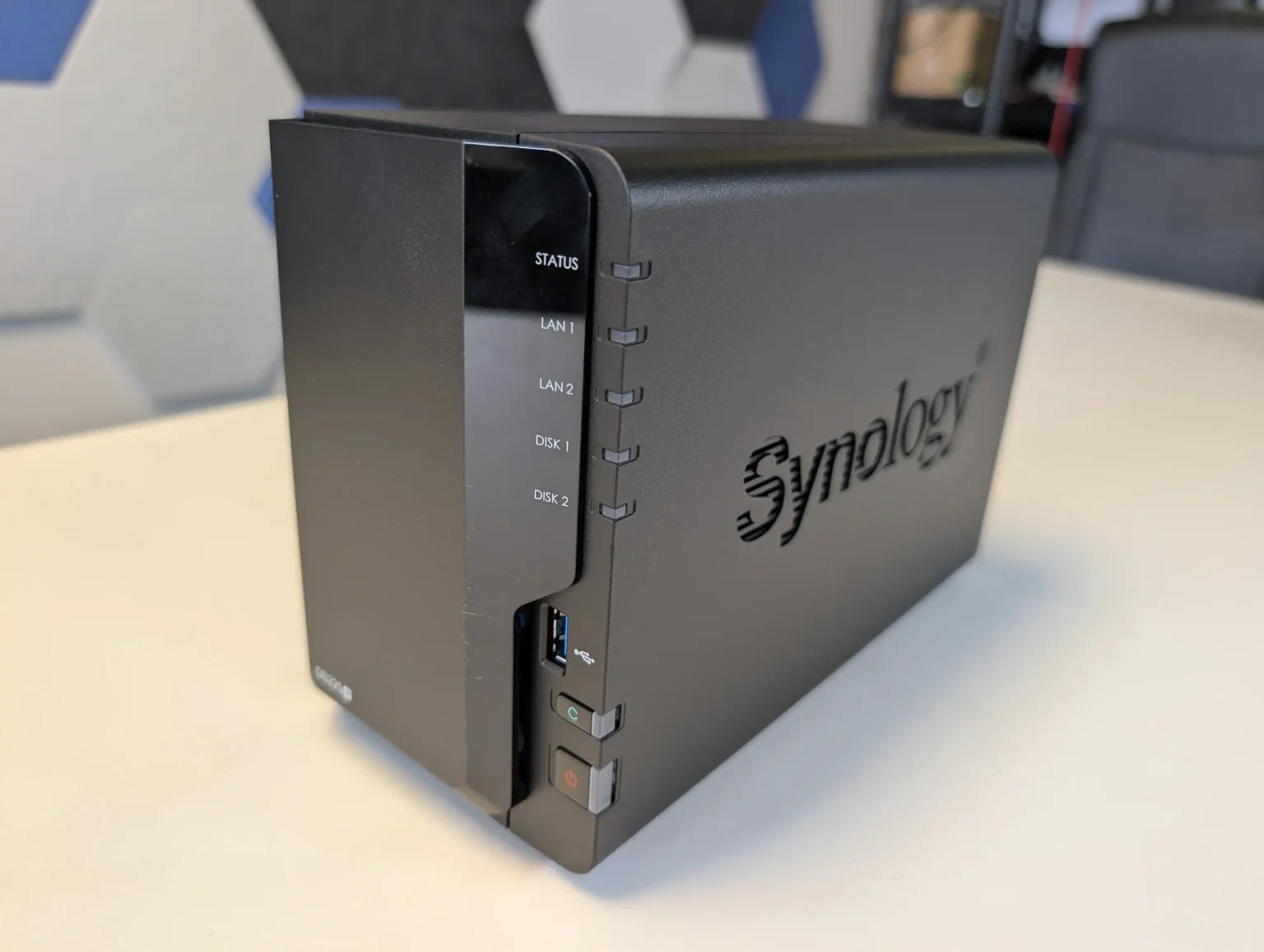
Storage is handled by a DS225+, freshly set up with two 8 TB drives. This NAS is going to be the backbone of the lab’s data layer and will be used for:
- Proxmox VM and container backups
- Centralized file storage
- Learning NAS features like snapshots, shares, and automation
This is my first step toward treating data as something that deserves real redundancy and planning.
Power Matters: UPS on the Shopping List
Unexpected power loss is a fast way to ruin a good day. I need a UPS for these things (the Proxmox box and the NAS) not because I want to run for hours, but because I want clean shutdowns and power conditioning so I don’t lose data to a sudden outage or brownout.
I actually ordered a Prolink UPS first, but when it arrived the smell coming from it was bad—like burned electronics—so I returned it immediately rather than risk plugging my lab gear into something that didn’t feel right.
Here’s how I’m thinking about it:
- Capacity first: I’m sizing it for the HP 805 G8 + DS225+, plus a bit of headroom for a switch/router later. I’m not trying to back up my entire house—just enough runtime to ride out short flickers and shut down safely if the power stays out.
- Line-interactive + AVR: I’d like a model that can handle minor voltage dips/spikes without instantly switching to battery all the time.
- Monitoring support: USB monitoring is a must so I can have Proxmox trigger shutdowns via NUT (Network UPS Tools), and the NAS can follow along.
- Replaceable batteries: I want something where replacing the battery in a couple of years isn’t a whole new UPS purchase.
- Outlet layout: Enough battery-backed outlets for the lab gear (and not all of them “transformer-blocking” tiny ones).
I’m currently looking at CyberPower options because the pricing/features seem reasonable for a small home lab, but my Shopee voucher isn’t ready yet—so the UPS is still in the “research + wait for discount” phase.
Networking: The Ugly Truth
Here’s the honest part: my home network isn’t great.
- I don’t even own a 1 Gbps switch yet—though I just ordered a TP-Link Omada ES208G (8-port Gigabit Cloud Managed Switch) and I'm currently waiting for delivery.
- The Ethernet cables running through the ceiling and walls are old, which likely hurts both speed and reliability.
However, the "repair kit" has already started arriving! I just received a haul of essentials to help me whip this network into shape:
- A Network Cable Tester (the classic RJ11/RJ45 box) to finally see which of my old cables are actually failing.
- A pack of RJ45 Couplers for quick fixes.
- UY Connectors (Scotchloks) for those tricky wire repairs.
- Even some fresh CR2032 CMOS batteries, because you can never have too many of those when dealing with older hardware.
Before this lab can reach its full potential, networking needs serious attention. That gigabit switch is the first step, and with these new tools, replacing or repairing the old cabling is next on the agenda.
What Comes Next
This setup is only the foundation. Over time, I want to layer on:
- Self-hosted services
- Monitoring and logging
- Automation, backups, and maybe even a small cluster
For now, this home lab is my sandbox—a place to learn, experiment, and occasionally break everything on purpose.
What should be the first service I deploy once the network is no longer the bottleneck?